Bullfrog Revolution: 1965-1974

The signing of Kevin Ryan and appointment of Peter Moore as Secretary brought a revolution within the Club, culminating in two Grand Final appearances across the decade.
- 1965 - Burns Returns, Again
- 1966 - The Curious Case of Roger Pearman
- 1967 - Ryan's Revolution
- 1968 - Belmore Boost
- 1969 - The Reformation
- 1970 - Turning a Corner
- 1971 - A Bump in the Road
- 1972 - Goodbye, Johnny Greaves
- 1973 - Malcolm in the Middle
- 1974 - Back to the Big Dance
1965 - Burns Returns, Again
Following an unsuccessful stint as Head Coach, Clive Churchill handed the reins back to Eddie Burns, who made a second comeback with the Club as caretaker.
It was another strong start and fast fall for the year, however, with the side winning their first four matches, but jagging just one more in their final fourteen outings.
Finishing only ahead of Easts, the only highlight of the season came with a 16-6 win over eventual runners-up, Souths in their opening match.
Season Snapshot
- Eddie Burns returns as Head Coach, taking over from Clive Churchill.
- The side wins their opening four matches before claiming just one win in their final fourteen.
- A ninth-placed finish sees Canterbury finish only ahead of Easts on the table.
- A 16-6 win over eventual Grand Finalists Souths in Round 1 was the highlight of the year.
Debutants: Barry Reynolds, George Taylforth, Jim Davidson, Clive Bryant, John Darby, Ron Ellis, Don Workman, Jim Hall
1966 - The Curious Case of Roger Pearman
Englishman Roger Pearman was the latest to become Captain-Coach of the side.
However, what made this case different from the others was that Pearman actively made himself a third-grade player after three rounds in a bid to better prepare the first-grade side throughout the week and on gameday.
The unique tactic failed to yield results, with an inconsistent season that featured two wins from the opening eight matches, a five-game winning streak before a solitary victory in the final five weeks.
But Canterbury maintained their giant-killing reputation as they had over the last decade, this time with a 15-11 win over runners up Balmain in Round 12. Captain George Taylforth potted five goals.
In another disappointment, however, the reserve grade side finished with the wooden spoon.
Season Snapshot
- Englishman Roger Pearman is appointed Captain-Coach, but actively makes himself a third-grade player to help his coaching preparations.
- A slow start saw two wins from the first eight games, before a five-match winning streak.
- The season ends with one win from the final five matches and an eighth-placed finish.
- The season highlight came in the form of a 15-11 win against runners up Balmain in Round 12
- The reserve grade side finishes with the wooden spoon.
Debutants: Ross Kidd, Barry Phillis, Ron Raper, Bruce McKinney, Merv Hicks, Bob Hunt, Bob Doyle, Max Brown, Barry Dickenson, Ray Windshuttle
1967 - Ryan's Revolution
Season 1967 saw a number of major changes across the NSWRFL; Penrith and Cronulla were promoted to the new 12-team competition, while the four-tackle rule was introduced in a bid to stop St George's Premiership run.
Big moves were happening in Belmore as well, with famed front rower Kevin Ryan joining Canterbury in a Captain-Coach capacity.
A dominant figure during St George's eleven-Premiership run in the 1960s, Ryan's experience and success immediately rubbed off on his new teammates.
Canterbury began with ten wins from their first twelve games, including a six-match run from Round 4 until Round 9.

While a four-match losing streak threatened to derail their season, the Blue and Whites recovered in time to claim third spot, with a 18-14 win in Round 21 win over the reigning Premiers a highlight.
The 'Berries disposed of surprise packet Easts in the Minor Semi, 13-2, before their grandest moment in nearly 20 years.
In one of the greatest upsets in history, Canterbury ended St George's run of eleven Premierships in the Preliminary Final, holding on for dear life with a 12-11 win.
Ryan was hoisted by the shoulders from his teammates after guiding the side to their first decider in two decades.
One week later at the Sydney Cricket Ground in front of a crowd of 56,358, a gallant effort was not enough against new kids on the block Souths, with a penalty goal all but separating the two, in a 12-10 defeat.
Still, plenty of hope lay over the horizon, with major changes and success around the corner.
Season Snapshot
- International Kevin Ryan joins the Club from St George as Captain-Coach, with his experience and success making an immediate impact.
- Penrith and Cronulla are the new teams to join competition.
- The NSWRFL makes a major change, introducing the four-tackle rule.
- The season starts very well, winning ten of the first twelve games, followed by four losses in a row.
- Canterbury finish third on the table, winning fourteen games with one draw.
- The major upset comes in the final, as Canterbury defeat eleven-time Premiers St George 12-11 to qualify for the Grand Final, their first since 1947.
- While Souths eventually win the Premiership 12-10, Canterbury gain plenty of admirers for their gallant effort.
Debutants: Dick Webb, Bob Hagan, Kevin Ryan, John Larcombe, Marty Driscoll, Brian Wedgewood, Terry Bawden, Col Hughes
1968 - Belmore Boost
Despite the major steps taken in 1967, season 1968 had little to celebrate.
While future International John Rhodes joined the Club from Brisbane, the major news in the off-season came in the upgrade of Belmore Oval, which officially became known as Belmore Sports Ground.
On the field, the season began with two successive losses, the first of which being at Canterbury's refurbished home.
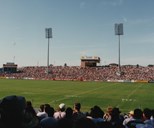
But their inspirational run from the year prior couldn't be replicated, with an inconsistent year resulting in a ninth-placed finish with just nine wins and a solitary draw.
Meanwhile, a promising figure by the name of Malcolm Clift begins his coaching career in third-grade.
Season Snapshot
- Future International John Rhodes joins the Club.
- Future first-grade Head Coach Malcolm Clift begins his coaching career with the third-grade team.
- Belmore Oval gets a facelift in the off-season, and becomes officially known as Belmore Sports Ground.
- Canterbury start the season slowly with two losses, including the opening game at the revamped Belmore Sports Ground, going down 16-12 to Cronulla.
- After a very inconsistent season, the Club finishes in ninth place with nine wins and a draw.
Debutants: John Rhodes, Terry Reynolds, Bill Walsh, Pat Thomas, Norm Thomas, Brian McPherson, Kevin Gentle
1969 - The Reformation
A slight improvement on the pitch to eighth position mattered little; the big battles were happening off the field.
Tensions erupted between the Football Club and League Club after the latter failed to approve an $8000 transfer fee to sign International winger Lionel Williamson.
The reform ticket consisted of five members; Kevin Ryan, Peter Moore, Reg Perrett, Graham Martin and Laurie McGowan.
Players supported the movement too, handing out pamphlets, publicly voicing their disapproval of the current board and made themselves seen - for the first time, players from a Club took an active part in League Club elections.

"We owed it to our supporters to build a good football team, and to do that we needed more money, not for the sake of spending, but to spend wisely," Moore stated.
"In previous years, we had been forced to stick with the same players. But history has shown you have to buy each year, and we didn't feel we were asking for too much."
The reform group won in a landslide in September, with Moore appointed as Secretary.
Despite the drama, and with International centre John Greaves out for the year due to injury, the season began well with six wins from seven matches, the highlight coming with a 19-15 win against eventual Premiers Balmain in Round 6.
In the background, Malcolm Clift's third-grade side finish as Grand Finalists, a precursor to his future success.
Season Snapshot
- The failure of the League Club to approve an $8000 transfer fee for the signing of International Lionel Williamson kicks off the events for 'The Reformation', which sees the appointment of Peter 'Bullfrog' Moore appointed Secretary.
- A major blow comes as International John Greaves misses the entire season due to injury.
- Despite the drama, season 1969 starts well, with the side winning six of the first seven matches, however this is followed by a five-match losing streak.
- Club finishes in a slightly improved eighth position with ten wins.
- The season highlight comes in the form of a 19-15 win against eventual Premiers Balmain in Round 6.
- Malcom Clift's third-grade side finish as Grand Finalists.
Debutants: Doug Kelly, Ray Strudwick, Les Perry, Col Greenwood, Alan Allison, Denis Scahill, Barry Norden, Brian Rowe, Gary Stewart, Malcolm Blakeley, Peter Louis, Alan Wells
1970 - Turning a Corner
Just one year following The Reformation, Canterbury found itself with silverware in hand, taking out the Wills Cup pre-season competition after defeating old foes St George in the Final.
After missing out on Lionel Williamson, the addition of Internationals Dennis Manteit, Ron Costello, Bill Noonan, Alan Burwell and youngster Chris Anderson propelled the side to nine wins from their opening twelve games, despite missing superstar Les Johns for the majority of the season.
Hall of Fame Inductee No 6: John Greaves
Changing roles also occurred, with Kevin Ryan retiring from his playing career, but maintaining his role as Head Coach, bestowing the captaincy to Ron Raper.
After Raper stood down from the role, strike centre John Greaves took over just in time for the finals after a fourth-placed finish.
Unfortunately in bittersweet irony, it was St George - who they defeated to claim the Wills Cup - that knocked the Blue and Whites out from the finals with a 12-7 defeat.
In a strong sense of alignment across the Club, both reserve grade and third-grade finished as finalists.
Season Snapshot
- With the popularity of English-style jerseys emerging, Canterbury change their jersey design to feature Blue and White striped bars.
- Kevin Ryan steps down as Captain, bestowing the honour to Ron Raper, but stays on as Head Coach.
- Canterbury bolster their ranks with the signings of Internationals Dennis Manteit, Ron Costello, Bill Noonan (New Zealand), Alan Burwell (Great Britain) and future international Chris Anderson.
- The season starts in excellent fashion, winning the Wills Cup pre-season competition, defeating St George 20-11 in the Final, with a good start to the Premiership with nine wins from the opening twelve games.
- International Les Johns misses most of the season through injury.
- John Greaves takes over Captaincy for the final two games after Ron Raper stands down.
- Fourteen wins gives the side a fourth-place finish, before they are eliminated in the first week of finals at the hands of St George, 12-7.
- Both the reserve grade and third-grade sides also finish as finalists.
Debutants: Peter Inskip, Wayne Peckham, Tony Brenton, Alan Burwell, Neville Hornery, Ron Costello, Bill Noonan, Dennis Beeby, Ernie Graham, Peter Van Gulik, Bruce Conneeley, Graham Herring, Phil Charlton, Dennis Manteit, Terry Murphy, Les Hutchings, Ray Payne
1971 - A Bump in the Road
Chasing a career in politics, Kevin Ryan's run at Canterbury came to an end in 1971.
Having turned around the Club's fortunes since his arrival in 1967, few could complain after his revolutionary ways.
Former first-grader Bob Hagan took over from clipboard duties, but it was a slow start with four losses in the opening month.
A respectable sixth-placed finish saw the Hagan-led side finish with eleven wins, with highlights including wins over Grand Finalists St George (16-11 in Round 7) and Souths (15-12 in Round 17).
It was a sad day on July 11, with a knee injury to Future Hall of Famer Les Johns ending his glittering career in Blue and White. The fleet-footed fullback finished with 103 games for the Club, 232 goals, 20 field goals, two Kangaroo Tours and was retrospectively named as man of the match honours for the 1967 Grand Final.
In a major highlight, however, both the reserve grade and third-grade sides took out the Premiership, giving plenty of optimism for the future.
Season Snapshot
- Former player Bob Hagan takes over the first-grade coaching role from Kevin Ryan.
- The season starts in poor fashion, losing the first four games.
- The side recovers slightly to finish in sixth position with eleven wins.
- Highlights of the season include wins over grand finalists Souths and St George.
- In a major highlight, both reserve grade and third-grade take out the Premiership.
- The legendary Les Johns plays his final game against Penrith in Round 16, with knee damage consigning him to retirement.
Debutants: John Armstrong, Wayne Golding, Greg Purcell, Peter Bellamy, Rod Jackson, Graham Tucker, Steve Calder, Chris Anderson, Roger Kinlyside, Garry Dowling
1972 - Goodbye, Johnny Greaves
In what would ultimately be his final season at Canterbury, centre and future Hall of Famer John Greaves was bestowed with the Captaincy.
International trio Geoff Connell, Bernie Lowther and Henry Tatana arrived in Belmore, further proof of 'The Reformation' making change throughout Belmore.
An inconsistent start to the season with five wins from the ten matches resulted in Greaves' side finishing in fifth place, just shy of a finals berth.
In further improvement, the reserve grade side claimed back-to-back titles under Malcolm Clift, while the third-grade side finishes as runners-up.
Season Snapshot
- John Greaves in his final season at the Club, is named Captain of the side.
- International trio Geoff Connell, Bernie Lowther and Henry Tatana join the Club.
- An inconsistent start to season sees the side win five of their opening ten matches.
- Canterbury finish just shy of a finals berth in fifth position with twelve wins.
- Reserve grade win back to back titles both under the coaching of Malcolm Clift, while third-grade finish as grand finalists.
Debutants: Bernie Lowther, Phil Young, Mick Trypas, Henry Tatana, Les Ewing, Geoff Connell, John Peek, Grahame Faint, Ray Dodd
Pumping Iron in the 1970s
1973 - Malcolm in the Middle
With unprecedented success in the lower grades, it was only logical that Malcolm Clift would get his call up to first-grade.
Clift made his own changes with Geoff Connell appointed Captain, with the Head Coach's new philosophies resonating with the side which began with six wins and a draw from their opening nine matches.
Recovering from a five-match run of losses, twelve wins and a draw allows Canterbury to finish in fifth place - thankfully so with the NSWRFL's new five-team finals system implemented.
While a 13-2 defeat to Newtown ends an otherwise solid season, Clift's impact on the side could not be ignored.
Meanwhile, Rugby League fashion circles, Canterbury reverted back to tis chevron jersey design after three years in stripes.
Season Snapshot
- After three years in stripes, the Club reverts back to its chevron jersey design.
- Following unprecedented success in the lower grades, Malcolm Clift takes over as Head Coach, while Geoff Connell is appointed Captain.
- The NSWRFL introduces a five-team finals series.
- Clift's new style resonates with the side, starting with six wins and a draw from their opening nine matches.
- They recover from a five-match run of losses to finish with twelve wins and a draw, finishing the season in fifth spot.
- A 13-2 loss in the first week of finals to Newtown ends Canterbury's season.
- The highlight of the season comes in the form of a 12-all draw with Premiers Manly in Round 1.
- The reserve grade finished in the semi-finals, while the Under 23s (third-grade) finish as finalists.
Debutants: Don Rogers, Peter Winchester, John McDonell, Stan Cutler, Dave Cotter, Tony Herring, Max Cole, Harold Stringer, Greg Howard
1974 - Back to the Big Dance
In another boost to Clift's plans, Great Britain International duo Brian Lockwood and Doug Laughton join the Club, with five wins to start the season.
A third-place finish sees Canterbury make consecutive finals series appearances for the first time since 1946-47, while a magical run including defeats against heavyweights Manly and Easts sees them qualify for the Grand Final.
Pre-Season in the 1970s
In a tense match against Eastern Suburbs, Canterbury are downed 19-4 in a scoreline that flattered their opponents, with late tries the only difference between the teams.
The Club's academy continued to produce, with future Hall of Famer and International George Peponis as well as the Hughes brothers - Garry, Graeme and Mark - all making their first-grade debuts throughout the season.
Season Snapshot
- Great Britain Internationals Brian Lockwood and Doug Laughton join the Club.
- The season begins with five consecutive wins before four successive defeats.
- A strong recovery late in the season sees the team reach third position with thirteen wins to qualify for back-to-back final series for the first time since 1946-1947.
- A magical finals run included great wins against Manly and Easts sees them qualify for their first decider since 1947, before being defeated by the Roosters 19-4 in the Grand Final.
- Future Hall Of Famer and International George Peponis makes his debut in Round 13.
- The Hughes brothers; Garry, Graeme and Mark all make their first-grade debut throughout the season.
- Strong results in the lower grades continued with reserve grade finishing as finalists, and Under 23s finishing as runners up.
Debutants: John Delaney, Mark Hughes, Garry Hughes, Brian Lockwood, Don Moseley, Doug Laughton, George Peponis, Peter Cassilles, Graeme Hughes

Canterbury-Bankstown Bulldogs respect and honour the Darug and Eora nations, who are the Traditional Custodians of the land and pay our respects to their Elders past, present and future. We acknowledge the stories, traditions and living cultures of Aboriginal and Torres Strait Islander peoples on the lands we meet, gather and play on.