Becoming Bulldogs: 1975-1984

The Club's fifth decade proved to be one of its most significant; one that included three Grand Final appearances, two Premierships and the birth of the Bulldogs.
- 1975 - Toughened by Tim
- 1976 - Macca And Turvey Make Their Mark
- 1977 - Bring in the Bulldogs
- 1978 - Ted's Team
- 1979 - Bring in The Entertainers
- 1980 - The Drought is Broken
- 1981 - Fall of The Champions
- 1982 - Peponis Calls Time
- 1983 - Glossop Resigns
- 1984 - The Dogs of War
1975 - Toughened by Tim
In 1975, more significant signings came through the Club, highlighted by Australian Test player Tim Pickup - who was named Captain - joining fellow North Sydney teammate Keith Harris.
The pair were joined by Great Britain International Mick Adams as a mid-season signing - bolstering the team's 6-3 start to the season.
While Pickup proved to be a valuable addition, his absence in the second half of the season was felt after he suffered a serious knee injury during the World Series match against England - with the side losing six of their final ten matches.

Despite still scraping through into fourth-place, a tense and bitterly close 6-5 defeat to Parramatta in the Minor Semi-Final ended their campaign on a sour note.
Defeating Grand Finalists St George twice throughout the season, with the reserve grade finishing as Semi Finalists and the under 23s finishing as Finalists proved to be highlights.
Season Snapshot:
- Canterbury sign Tim Pickup, Keith Harris and Mick Adams to join the side late-May 1975. Pickup was named Captain of the side.
- Six wins from their first nine were compounded by a knee injury to Pickup, losing six of their last ten.
- Canterbury finish in fourth place however are eliminated by Parramatta 6-5 in the Minor Semi-Final.
- The side's wins against Grand Finalists St George in both rounds are the highlights of the year.
- Reserve grade finished Semi Finalists while under 23s finish as Finalists.
Debutants: Mick Ryan, Tim Pickup, Keith Harris, Tom Gillogly, Mick Adams, Steve White, Chris Skelton
1976 - Macca And Turvey Make Their Mark
They couldn’t have been more polar opposite in age, stature and positions, but another significant additions to the Club were made in 1976 that would change the course of Canterbury-Bankstown's history forever.
Firstly, legendary forward Bob McCarthy joined after being let go by South Sydney, despite being a famed State and International star and winning multiple Premierships at the Rabbitohs.
Such was his reputation, Malcolm Clift opted to make McCarthy Captain with the ongoing knee injury to Tim Pickup.
A promising youngster from Turvey Park in Wagga Wagga, Steve Mortimer, also made his first-grade debut, kicking-off the first of thirteen magnificent seasons in Blue and White.
Meanwhile, yet another Great Britain International, this time Eric Hughes, joined Mick Adams at the Club in late May.
McCarthy's Triple: Minor Semi vs St George, 1976
While a fifth-place finish (after a decent 5-4-1 start to the season) might have been seen as a downgrade on the season prior, Clift's team now had more experience and enthusiasm to call upon.
After upsetting back-to-back Premiers Eastern Suburbs 22-13 in the first week of finals, Canterbury backed up with another significant win, this time disposing 1975 Grand Finalists St George 25-9.
But the thrilling run came to an agonising end in the Preliminary Final, downed by three points at the Sydney Cricket Ground to eventual Premiers, Manly.
It was a promising leap into the volatile world of finals football, the side much better for the experience.
The lower grades experienced varying results; reserve grade failed to qualify for the finals, while thirds reached the Grand Final.
Season Snapshot:
- International Bob McCarthy joins from South Sydney and is appointed Captain.
- Youngster Steve Mortimer joins the Club, while Great Britain International Eric Hughes joins Mick Adams at Belmore in late-May 1976.
- The Club has a reasonable start to the season with five wins and a draw in their opening ten matches.
- Despite a fifth-place finish, two great finals wins against defending Premiers Easts (22-13) and 1975 Grand Finalists St George (25-9) lead them to the final against Manly, where they are downed 15-12.
- Reserve grade fail to qualify for the finals, while third grade finish Grand Finalists.
Debutants: Steve Mortimer, Bob McCarthy, Peter O'Neill, Steve Gearin, John Dransfield, Steve Hage, Eric Hughes, Mal Creevey, Mick Basham
1977 - Bring in the Bulldogs
After over 40 years of numerous nicknames and pseudonyms, the Club finally brought in a new 'mascot' - the Bulldogs.
Talk of the Bulldogs went back to 1975, with an article via Geoff Prenter from Rugby League Week first brought in the argument to rename the team.
"The name Berries hardly typifies a team of tough first grade footballers. Bulldogs would be more like it." Prenter argued.
On the eve of their Round 1 match in 1977, Secretary Peter Moore confirmed that the Club would be known as the Bulldogs.
We are the Bulldogs now. We've been wanting a mascot for some time now and we felt it was time this year.
A trio of signings bolstered the side further; Bob McCarthy's former Souths teammate Gary Stevens, a second Mortimer brother, this time Peter and future international Greg Brentnall joined from Wagga Wagga.
The new identity and additions to the side sparked a strong start to the year with five wins and a draw in the opening eight rounds; including a famous 17-7 victory over Premiers St George in Round 3 at Kogarah Oval.
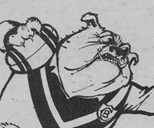
However, it wasn't meant to be in 1977 as a heavy injury toll contributed to a seventh-place finish - the first time since 1972 that the side missed the finals.
While the departure of Head Coach Malcolm Clift and stalwart Bob McCarthy at season's end coupled with the reserve grade and under 23s sides missing the finals bode poorly for the future of the side, things were just getting started for the Canterbury-Bankstown Bulldogs.
Season Snapshot:
- Secretary Peter Moore announces that the Club will now be known as Bulldogs.
- Another South Sydney International, Gary Stevens, joins the Club while other signings include Peter Mortimer and Greg Brentnall.
- A strong start to the season including five wins and a draw from their opening eight games is undone with a heavy injury toll, finishing in seventh place.
- A solid 17-7 defeat of the defending Premiers St George in Round 3 at Kogarah Oval is the highlight of the year.
- Head Coach Malcolm Clift calls time on his coaching career, making four finals series from five years, which included an appearance in the 1974 Grand Final.
- The great Bob McCarthy was also farewelled after returning to South Sydney for season 1978.
- Both reserve grade and under 23s fail to qualify for the finals.
Debutants: Greg Mullane, Gary Stevens, Greg Brentnall, Ray Kear, Peter Mortimer, Geoff Robinson, Gerard Raper, John Coveney, Greg Cook, Pat English, Dave Allison
1978 - Ted's Team
Three major changes occurred in season 1978;
- Ted Glossop was appointed as Head Coach, via Cronulla.
- With Bob McCarthy returning to South Sydney, hooker George Peponis was named Captain of the side.
- The very first Bulldogs logo was officially emblazoned on the Club's jersey.
The first two changes, along with the addition of a third Mortimer brother, Chris, catapulted the side to seven wins from their first ten games.
And while a fifth-placed finish was met with a 22-15 defeat at the hands of Parramatta in the first week of the finals, the team had evolved enough to compete with the best.
Bob McCarthy on Joining the Bulldogs
That included two big wins over eventual Premiers Manly in both rounds; 16-13 at Belmore in Round 4 and impressively, 12-9 at Brookvale Oval in Round 15.
While both reserves and under 23s failed to qualify for the finals, a promising local junior called Steven Folkes makes his debut against South Sydney in Round 16.
The news and events were plenty throughout the year as well. Secretary Peter Moore was awarded Life Membership of the Football Club after a strong first ten years of service.
Meanwhile, Peponis became the first Canterbury junior while at the Club to play in a Test match in his debut for the Kangaroos against New Zealand in June.
Season Snapshot:
- Former Cronulla caretaker Ted Glossop is appointed first-grade coach.
- With the departure of Bob McCarthy, George Peponis is appointed Captain.
- The new Bulldogs logo is implemented on the Club’s jersey.
- The Club signs younger of Steve and Peter Mortimer, Chris.
- The season starts strong with seven wins from the first ten matches, but a fifth-place finish results in being eliminated in the first week of finals, 22-15 to Parramatta.
- Future International, Bulldogs Hall of Famer and local junior Steven Folkes makes his first-grade debut against Souths in Round 16.
- Wins against Manly in both rounds of the regular season prove to be highlights.
- For the second year in a row, the reserve grade and under 23s teams fail to qualify for the finals.
- On the 1978 Kangaroo Tour, George Peponis becomes the first Canterbury junior to play in a Test Match while at the Club.
- Peter Moore is awarded Life Membership of the Football Club.
- The Club mourns the passing of promising hooker Dave Allison, who died in a work accident during the season.
Debutants: Steven Folkes, Chris Mortimer, Stuart Collis
1979 - Bring in The Entertainers
In a show of solidarity and faith in local pathways talent, the Club opts against purchasing any elite players despite losing a host of names to Newtown.
The faith pays off, with a 7-3 start to the year propelling the Bulldogs back into the Grand Final for the first time in five years.
They didn't do it easy, however, winning just half of their final twelve matches meant results needed to go their way - a one-point victory from South Sydney over Balmain put them in fifth position.
Just as they seemed down and out, the side sparked to life.
Spearheaded by halfback Steve Mortimer and dubbed 'The Entertainers' by the media, the Bulldogs completed a magic run to the decider, winning sudden death matches against Wests (20-6), Cronulla (30-15) and old foes Parramatta (20-14).
Unfortunately, the proverbial saying 'all good things come to an end' was on hand, with a poor first half leading to a 17-13 defeat to St George in the decider, despite a fast finish.
In a highlight, George Peponis' reputation as a leader continued to rise, becoming the first and only local junior to be named as Captain of Australia.
Meanwhile, former Captain and star five-eighth Tim Pickup announces his retirement after guiding the reserve grade side to the Grand Final following five years at the Club and 47 first-grade matches.
Season Snapshot:
- The Club loses a host of players mainly to Newtown but decide not to purchase any elite players, deciding to keep the current squad and continue to develop from within.
- The Club starts well winning seven of their first ten games, and despite just six wins from the remaining twelve, the Bulldogs qualify for fifth place.
- Sudden death wins against Wests, Cronulla and Parramatta help them qualify for the Grand Final.
- Unfortunately, a bad start to the match sees the Bulldogs eventually defeated 17-13 to the Dragons.
- Reserve grade finished as runners up, while the under 23s fail to qualify for the finals.
- George Peponis becomes the first local junior to Captain Australia.
- International Tim Pickup announces his retirement.
Debutants: David Moffett, John Abbott, Leo Driver, Terry McCartney, Gary Sullivan, Peter Smith, Graham Faux
1980 - The Drought is Broken
After falling short in the 1979 decider, 'The Entertainers' looked to go one better in 1980, going against the odds to break a 38-year Premiership drought.
Lack of size in the forwards would be of little consequence because creativity and mobility could overcome it, especially since the skill level of so many players was high.
The first concerns of not having Belmore Sports Ground for the first three months of the year because of the grandstand construction was perhaps more than just psychological. Players had to change in nearby Belmore Bowling Club, and Glossop and his selectors met in a caravan at the Belmore Sports Ground on Tuesday nights to select the team.
1980 Grand Final Highlights: Bulldogs vs Roosters
Canterbury's early season form in 1980 was hardly that of a Grand Final winner; they suffered three of their worst defeats in that early period when their training habits were disrupted, and when they could not play on Belmore.
This came in the form of a 35-9 thrashing at the hands of Cronulla, before losses to Easts (20-5) and Wests (24-8). For all their flair and creativity, the side only scored more than 30 points in a match once, the very first clash against Newtown, 38-17.
The Bulldogs clawed their way to the equal top of the table with Easts, pipped on for and against for the Minor Premiership, but it was their creativity and flair that overflowed in one of the great finals campaigns.
They began with a 22-17 win over Wests (the scoreline far less convincing than the performance), before a 13-7 win over Easts that sent the Bulldogs into the decider, and pitted the two against one another for the other spot.
The Roosters' dominant 41-5 thrashing of the Magpies failed to dampen any confidence for Ted Glossop's side.
1980 Grand Final Moment: Anderson's Thrilling Four-Pointer
In fact, Canterbury's 18-4 victory on Grand Final day proved to be one of the most methodical victories in history.
Just two tries were scored, both by Canterbury's wingers, Chris Anderson and Steve Gearin, the smothering and tight defence paving the way for the two speedsters to touch down.
It also marked the first day the Club won two Grand Finals on the same day, with the reserves taking home the Premiership.
As Canterbury dominated the match territorially in the second half, Gearin kicked three penalties to take the Bulldogs to a 13-4 lead. Each time Easts looked to break away, Mortimer was there to cut them down with a textbook cover tackle.
The moment that will live on for as long as time itself is Gearin's famous four-pointer in the dying stage of the match.
Inside his own half, Graeme Hughes took a pass and stepped left looking for a gap. Greg Brentnall loomed up, putting up a high ball in the air towards the try line.
1980 Grand Final Moment: Gearin's Try for the Ages
Gearin, who had moved infield, sprinted desperately, never taking his eyes off the ball, and in front of two despairing Easts defenders, caught the ball on the full and plunged over.
One of the great Grand Final tries was an emotional moment as the truth came home as Canterbury had claimed victory, their final act of scoring as creative and spontaneous as expected.
Season Snapshot:
- The Club again refrains from buying elite players and remain with the current squad adding Lee Pomfret from St George and Australian Schoolboy Andrew Farrar to the roster.
- The Bulldogs start their campaign with five win and five losses, but win ten of the last twelve games to finish in equal first place, relegated to second only due to for and against.
- The opening of the new Stewart Stand at Belmore Sports Ground in Round 8 against St George draws a crowd of 25,148.
- The finals see wins over Wests in the semi final 22-17 and Easts 13-7 in the second semi final to qualify again for the Grand Final.
- On Grand Final day the Bulldogs reserve grade side defeat Parramatta in extra time 18-16.
- In the first-grade Grand Final Canterbury defeat Easts 18-4 winning their first Premiership since 1942. A magnificent try by Steve Gearin with five minutes remaining sealed their third title for the Club.
- The under 23s fail to qualify for the final series.
Debutants: Allen Geelan, Lee Pomfret
1981 - Fall of The Champions
What goes up must come down, and season 1981 proved to be a hangover of sorts for Canterbury-Bankstown.
For a third-straight season, Peter Moore and co were quiet in the player market, but no one could have predicted the glandular fever scare and injury toll the year would bring.
Despite maintaining their famous flair and finishing with the fourth best attacking record, Ted Glossop's side finished in tenth position after just eight wins.
Still, the year had its share of highlights, including the defeat of eventual Grand Finalists Newtown in Round 18, the first-grade debut of future great Andrew Farrar and Steve Mortimer's debut for Australia.
Season Snapshot:
- The season started poorly only winning three games in the first ten rounds, with just eight total wins and a tenth-place finish.
- Future International Andrew Farrar made his first-grade debut against Eastern Suburbs in Round 16.
- Despite their final placing, the Club continued the entertaining style of football ranked in fourth place in attack.
Highlights of the season included defeating Grand Finalists Newtown in Round 18 and halfback Steve Mortimer's debut for Australia. - The reserve grade finished semi-finalists and the under 23s didn’t qualify for the final series.
Debutants: Ray Downie, Neil Baker, Steve Want, Joe Reaiche, Craig Madsen, George Fahd, Andrew Farrar, Steve Mullen, Greg Sankey, Tony Davies, Paul Gearin
1982 - Peponis Calls Time
With Canberra and Illawarra joining the competition, and the season extending to 26 rounds, the Bulldogs continued to stay quiet in the transfer market.
After a disappointing season previously, the Blue and Whites started strongly with six wins and a draw from their opening ten matches, with their three losses being by small margins.
The smallest of margins came on March 28, when against Newtown they completed the first and only nil-all draw in Premiership history.
Face To Face: George Peponis
But a turbulent April would rob the Club of two of its finest players, with serious knee injuries to George Peponis and Graeme Hughes one week later seeing both men play their final matches.
An inconsistent finish to the season with twelve wins and three draws consigned the team to ninth place - also marking the first time that no team had qualified for the finals since 1968.
In a remarkable highlight, however, fullback Greg Brentnall was named as the Rothman's Medal as the competition's Best and Fairest player.
Brentnall was a force at the back, scoring thirteen tries across the season, and kicking a field goal (along with a try) in the Round 23 victory over Penrith.
Season Snapshot:
- Canberra and Illawarra joined the competition, extending the number of teams to fourteen.
- Barry Nelson was appointed President of the Football Club.
- After a disappointing season in 1981 the Bulldogs had a good start to the season winning six games and drawing one of their first ten games, with all three losses small margins.
- Premiership history was made on the 28th March 1982 with the first and only nil-all draw against Newtown.
- Club legends Graeme Hughes and George Peponis played their final matches during the season, both retiring due to ongoing injuries.
- An inconsistent season finished with twelve wins and three draws from a now 26-game season ending in ninth place.
- Highlights of the season included a victory over Premiers Parramatta in Round 1 and Greg Brentnall winning the Rothmans Medal.
- Reserve grade and under 23s both didn’t qualify for the final series, marking the first time since 1968 that the Club didn’t had a team in the final series.
Debutants: Denis Donoghue, Tony Armstrong, Tas Baitieri, Chris Hughes, John Kasbarian, Tony McWilliam, Mark Bird, Mark Brennan
1983 - Glossop Resigns
In his sixth and eventually final year as first-grade Head Coach, Ted Glossop resigned from his post.
Across the Club's 49-year history, Glossop became the longest-serving coach - a post that he would hold for the best part of the following decade.
Leadership also shifted on the field, with the retirement of George Peponis, the captaincy role was shared by Garry Hughes and new signing Tas Baitieri.
Coupled with heavy recruitment including International Jim Leis, centre Ross Conlon, front rower Terry Leabeater, Newtown duo Phil Gould and Mick Pitman as well as Australian Schoolboys Captain Paul Langmack saw a shifting identity in the side.
1983 Preliminary Final: Robinson Crashes Over
The side began their year with a reasonable six wins from the first ten matches, but a strong finish with twelve from sixteen saw them finish in third position in their first finals series since the 1980 Premiership.
Despite a first-week loss to Parramatta, the Bulldogs redeemed themselves against rivals St George in a close, 26-24 victory at the Sydney Cricket Ground.
The Eels' victory over Manly set up a rematch, but the eventual Premiers proved too strong, with Glossop's 151st and last match as first-grade Head Coach a gallant 18-4 defeat.
Legendary pair Mark Hughes and Greg Brentnall retired from the game following illustrious careers in Blue and White, both members of the 1980 Premiership-winning side.
Season Snapshot:
- Ted Glossop entered his sixth year as first grade coach, becoming the longest running coach in the Club’s 49-year history.
- With the retirement of George Peponis, the captaincy was shared by Garry Hughes and Tas Baitieri during the season.
- International Jim Leis, centre Ross Conlon, front rower Terry Leabeater, Phil Gould, Mick Pitman Australian Schoolboys Captain Paul Langmack joined the Club.
- from their remaining sixteen to qualify for their first finals series since 1980, finishing in third position.
- The side's season ended at the hands of Parramatta, downed 18-4.
Legendary figures Mark Hughes and Greg Brentnall decided to retire at season's end. - Reserve grade finished semi finalists while third grade fail to qualify for the finals.
Debutants: Jim Leis, Phil Gould, Billy Johnstone, Michael Pitman, Ross Conlon, Terry Leabeater, Gerald Celarc, Paul Langmack, Geoff Spotswood, Michael Hagan, Mick Potter, Jack Anslow, Mark Harrigan
1984 - The Dogs of War
It could be argued that a combination of good management and good fortune brought the Club's fourth Premiership in its 50th year.
The season marked Terry Lamb's first in the Blue and White after transferring from Western Suburbs and coming off a Dally M Medal in the side that finished last.
Hulking forward Peter Tunks also joined, coming from South Sydney having represented his state joining Brian Battese, a second rower from Wests, and Daryl Brohman from Penrith.
Highlights: Bulldogs vs Panthers - Round 7, 1984
Perhaps the most important signing, however, was Head Coach Warren Ryan; following 1980 Premiership mentor Ted Glossop's retirement, there came in a gap needed to be filled in by a new coach with new ideas and new policies.
After Ryan was signed, he added in tough forward Peter Kelly and crafty hooker Mark Bugden to round off his squad; revered as the most concerted and successful off-season buying of any Club in the Premiership.
Ryan's brought in a new style and method to Canterbury, differing greatly from the previous six years under Glossop; and it looked like it work - at no stage did the 1984 Bulldogs lose their lead at the top of the table, and they were the only team after three rounds.
No Club jumped ahead of the Bulldogs on points.
Highlights: Bulldogs vs Sharks - Round 9, 1984
Lamb's arrival coincided with winning ways, his try-scoring and point-scoring ways guiding the Bulldogs to glory, while netting him the Rothmans Medal for 1984. Fullback Mick Potter, in his second year of first-grade, remarkably took home the Dally M Medal.
As part of the radical change, four captains were used throughout the season; Chris Anderson began in charge, before Lamb was given the honour. Steven Folkes took charge when Lamb and Mortimer were away on representative duty, before Steve Mortimer took up the mantle for the rest of the season.
Following the performance of his halves partner against Queensland, Lamb selflessly relinquished the responsibility to Mortimer.
On the field, Ryan's side finished the season on 42 points, four clear of their nearest rivals in Parramatta and St George - with the one week of rest acting as a major boost for the side.
1984 Grand Final Extended Highlights: Bulldogs vs Eels
The Bulldogs withstood a late rally to down eventual Grand Final opponents Parramatta 16-8, with Mortimer playing a key role in the win to qualify for the decider.
While many pundits and critics alike saw the lone finals match as a disadvantage for the side's preparation, Ryan and the Bulldogs compensated with emphasis on fitness and ball work under the Club's conditioner Dave Cooper.
The preparation seemed to play wonders for the side, who recorded a famous 6-4 victory over the Eels, which remains as the lowest Grand Final scoreline in history.
Season Snapshot:
- With Newtown's exit from the competition, the length of the regular season was reduced to 24 matches.
- Warren Ryan was appointed first-grade Head Coach, with Captaincy going to Chris Anderson until Round 14, before finishing with Steve Mortimer.
- The Club secured the signatures of future Hall of Famer Terry Lamb and forward Brian Battese from Wests, Newton pair Peter Kelly and Mark Bugden, Peter Tunks from Souths and Queensland State of Origin front rower Darryl Brohman via Penrith.
- The season started magnificently with ten wins from the first eleven games, finishing the season as Minor Premiers for the first time since 1947.
- After Parramatta's win over St George in the first semi-final, the Bulldogs defeated the Eels 16-8 to make their first Grand Final appearance since 1980.
- In a close contest against Parramatta, Canterbury prevailed 6-4 to claim their fourth Premiership, with Peter Kelly awarded Man of the Match honours.
- Season 1984 also marked the Club's 50th season in the competition.
- Duo Terry Lamb and Mick Potter claimed the Rothmans Medal and Dally M Award respectively.
- Lamb finished the regular season as the competition's highest try-scorer with 17.
- It proved to be the end of an era for the Hughes family, with Garry - the last of the three brothers - retiring at season's end.
- Both lower grade teams failed to qualify for their respective finals series.
Debutants: Kevin Pobjie, Terry Lamb, Peter Tunks, Peter Kelly, David Burnes, Peter Johnston, Steve O'Brien, Mark Bugden, Brian Battese, David Gillespie, Greg Brown, Max Mannix, Darryl Brohman

Canterbury-Bankstown Bulldogs respect and honour the Darug and Eora nations, who are the Traditional Custodians of the land and pay our respects to their Elders past, present and future. We acknowledge the stories, traditions and living cultures of Aboriginal and Torres Strait Islander peoples on the lands we meet, gather and play on.